
SUSTAINABLE WATER TREATMENT SOLUTIONS

Pioneering Nanofiber
Solutions for
Advanced Water
Filtration.

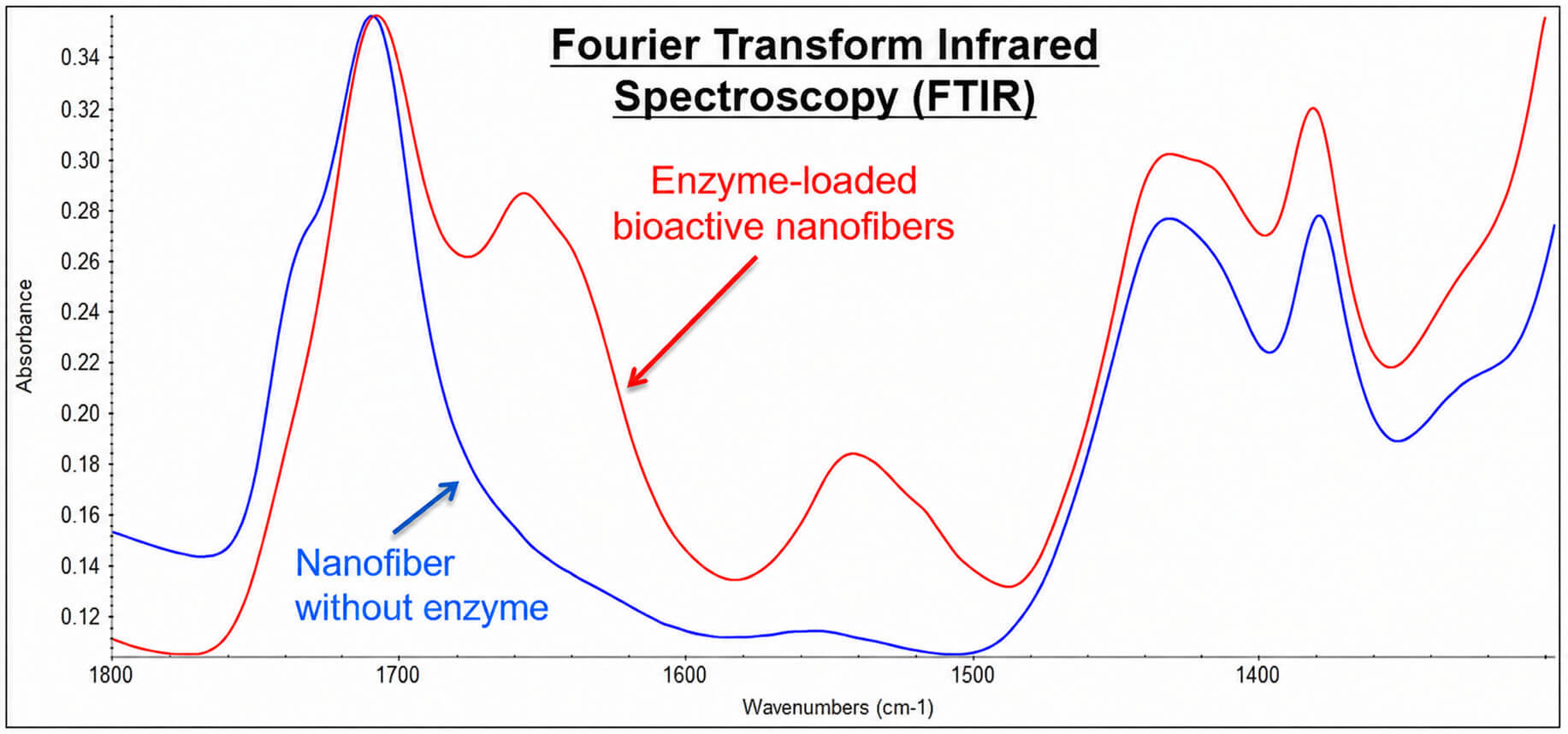
NASK NANO water filters utilize cutting-edge nanofiber technology embedded with immobilized enzymes. Unlike conventional physical filtration, this innovative approach works through catalytic conversion, actively degrading soluble contaminants such as pesticides, herbicides, antibiotics, and hormone residues that cannot be removed by traditional barriers. The result is truly purified water—safe, clean, and free from trace organic pollutants.

3 MICRON PARTICLE REMOVAL
  • HIGH FLOW PERFORMANCE

CORE INNOVATION

THE MECHANISM OF PRECISION

Our proprietary needle-free electrospinning process creates ultra-fine fibers with diameters in the nanoscale range, achieving a remarkable 90% porosity. This unique structure enables multiple modes of filtration simultaneously:
MECHANICALM
Precision Sieving
INTERCEPTION
Precision Sieving
IMPACT
Inertial Impaction
ADSORPTION
Molecular Binding

KEY METRIC

Filtering particles/cysts as small as 3 microns with 2-5x higher flow rates than traditional filters.

Why Should We Use NASK NANO for Water Filtration?

Our proprietary needle-free electrospinning process creates ultra-fine fibers with diameters in the nanoscale range, achieving a remarkable 90% porosity. This unique structure enables multiple modes of filtration simultaneously:
NASK Nano Immobilization method of microorganism
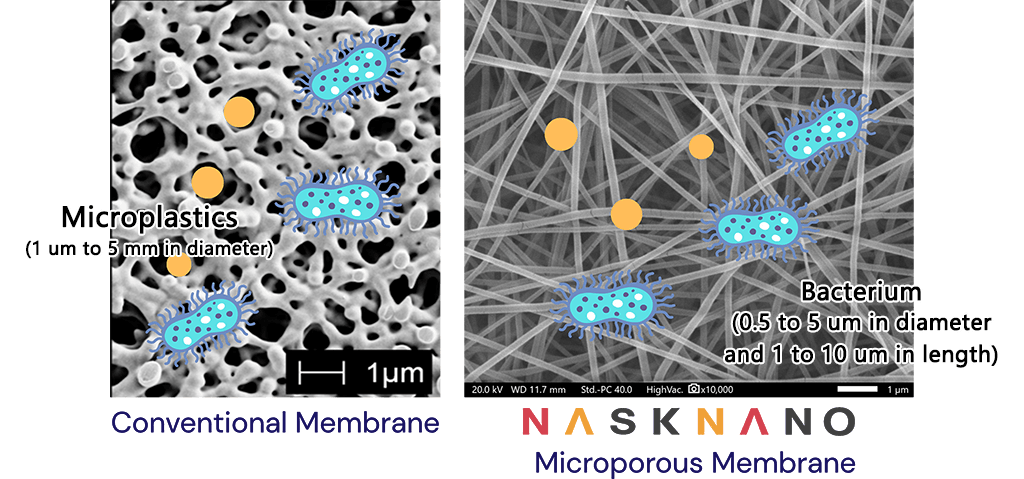
Able to trap tiny particles while maintaining very low resistance
Able to break down dissolvable contaminants that can hardly be removed by membrane filters
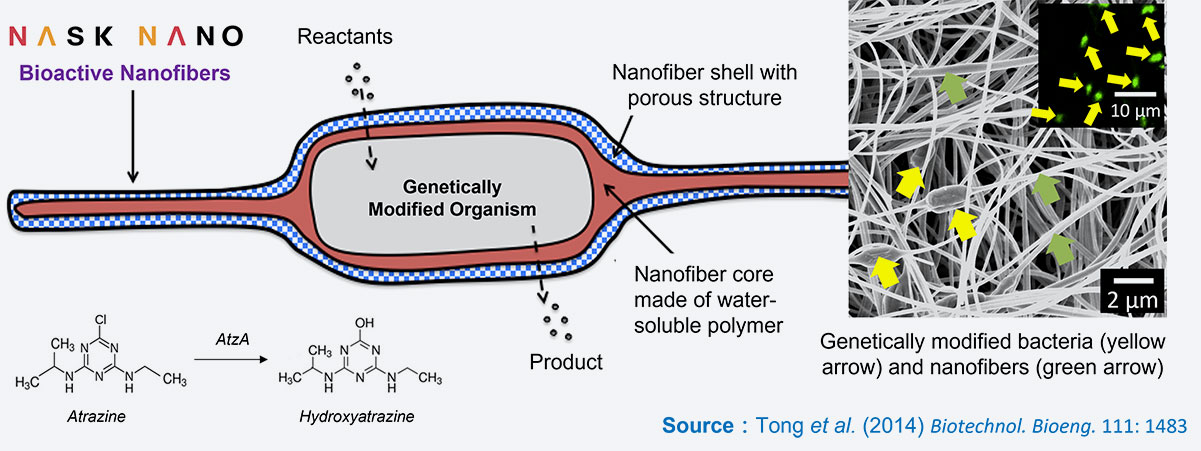
Mechanism – NASK NANO
Larger size particles cannot pass through the nanofiber film but small size particles can pass through the nanofiber film
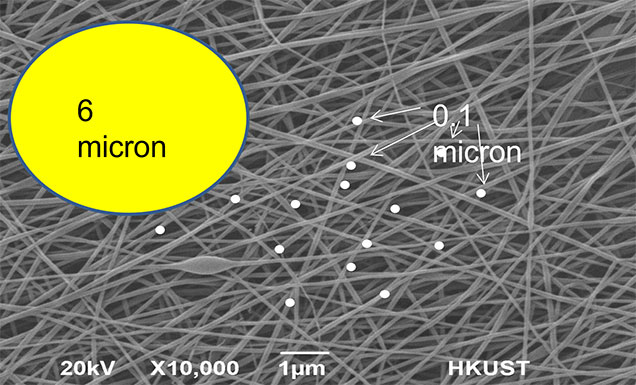
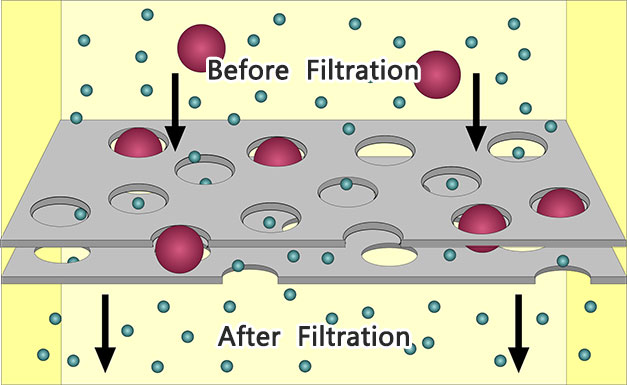
Physical Filtration
Microporous membranes can trap micron-sized particles effectively!
VERSATILE APPLICATIONS

Addressing critical pain points including premature clogging, low throughput, and excessive energy consumption across diverse sectors.

Purification of drinking water for home use

Point-of-Use (POU) and Point-of-Entry (POE) systems for superior domestic purity.

Industrial wastewater treatment

Efficient removal of dyes, heavy metals, and persistent organic pollutants.

Emergency water purification device in disaster areas

Optimizing cooling towers and boiler systems with high-flow filtration.

Preparation of medical / laboratory grade ultrapure water

Pre-treatment protection for RO membranes, extending life and reducing energy.

OIL-WATER SEPARATION

Marine aquaculture water management

Agricultural irrigation water purification

Marine aquaculture water management

Traditional Membrane VS NASK NANO Membrane

Criteria Traditional Membrane NASK Nano Advantages and Disadvantages Analysis
Pore size range 0.1 – 10 µm 0.1 – 1 µm
  • NASK Nano: Efficiently retains micron-sized particles, and even some viruses (by further reducing pore size through surface modification).
  • Traditional membrane: Multiple layers are required to achieve similar precision, resulting in increased membrane thickness and reduced flux.
Porosity 30 – 50% 80% above
  • NASK Nano: Features high porosity and a three-dimensional interconnected pore network, resulting in low water flow resistance.
  • Traditional membrane: Relies on a dense structure to achieve small pore size, resulting in high water flow resistance.
Operation Pressure 1.0 – 3.0 bar 0.1 – 0.5 bar
  • NASK Nano: High flux can be achieved even under low pressure (0.1–0.5 bar)—for example, at 0.2 bar, the flux can reach twice that of conventional membranes—with an estimated 30–50% reduction in energy consumption.
  • Traditional membrane: Requires higher driving pressure (e.g. 1.0–3.0 bar), resulting in high pumping energy consumption.
Contamination Resistance Low High
  • NASK Nano: Hydrophilic treatment can reduce organic matter adsorption, and during long-term operation, the fouling rate is estimated to be 40% lower than that of conventional membranes.
  • Traditional membrane: Surface modification is challenging and may compromise mechanical strength.
Cleaning energy consumption High Low
  • NASK Nano: The surface is smooth and antibacterial, making it difficult for contaminants to adhere, thereby reducing the frequency of backwashing and the use of chemical cleaning agents.
  • Traditional membrane: Prone to forming irreversible fouling (e.g. organic contaminants seeping into membrane pores), requiring frequent chemical cleaning, which increases energy consumption and shortens membrane lifespan.
Stability Low High
  • NASK Nano: Flux remains stable over the long term.
  • Traditional membrane: Flux decreases rapidly with fouling.
Sustainability Low High
  • NASK Nano: biodegradable, environmentally friendly
  • Traditional membrane: Uses petroleum-based membrane materials, which harm the environment.

STABILITY CONTROL

Precise temp/humidity control for stable density.

REAL-TIME MONITORING

Online water permeability testers ensure quality.

Engineering a Purer Future

Founded on the principles of microscopic precision, Synthetix Precision Systems’ Global Water AI Division—NASK NANO—is dedicated to solving the world’s most critical resource challenges through sustainable water treatment solutions.

Our needle-free electrospinning technologies are deployed in over 40 countries, powering desalination plants, pharmaceutical labs, and sustainable smart cities with unprecedented efficiency.

99.9%

GLOBAL CERTIFICATION

40+

PATENT ARTIFACTS

ISO

14001 COMPLIANT

AMC

SCALABILITY READY