
Next-Generation Nanofiber Membranes.
The Future of High-Performance Air Filtration
At NASK, we are redefining the limits of air purification technology. Moving beyond the limitations of traditional media, our advanced needle-free electrospinning platform delivers mass-produced, highly homogeneous nanofiber enhancement layer that drastically elevate filtration performance while driving down energy costs.
We provide next-level manufacturers with the ultimate competitive edge and offer end-users an unprecedented level of clean air security.
Nanofiber Air Filter
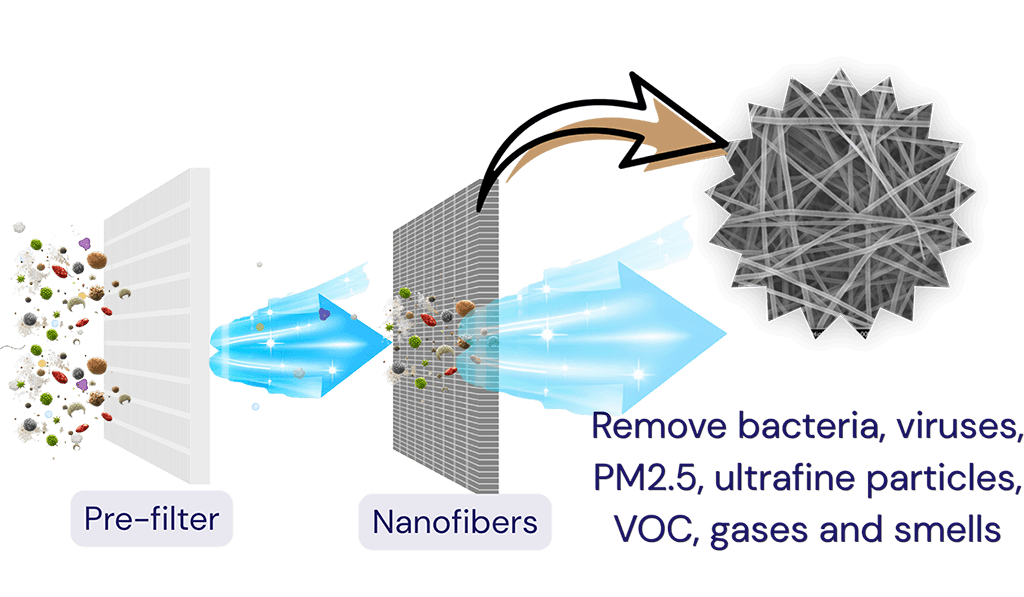
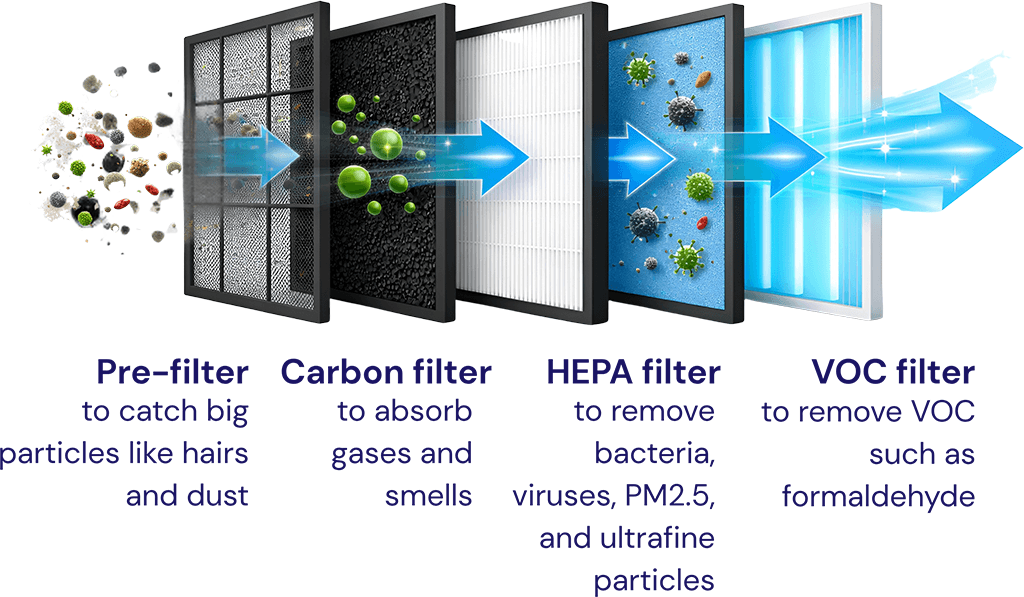
Two-stage Engineered Filtration
High porosity
High specific surface area
Conventional Air Filter
Four-stage Stacked Filtration
Low porosity
Moderate specific surface area
The Science of Precision
Core Mechanisms & Innovation
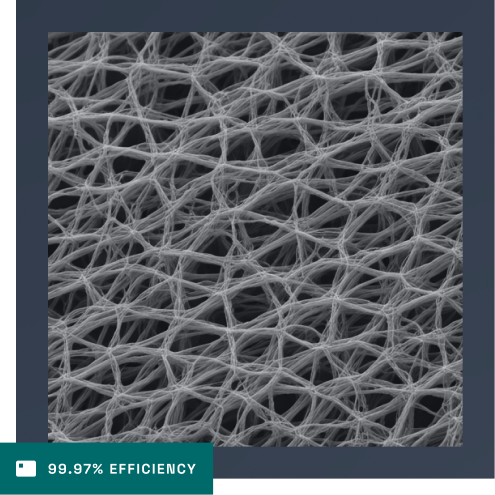
Our nanofibers achieve an exceptional filtration-to-resistance ratio (high Quality Factor)
through a synergy of advanced morphological engineering and surface chemistry.
01
The Slip-Flow Effect (High Efficiency + Low Pressure Drop)
Traditional mechanical filters rely on thick fiber networks that obstruct airflow, creating high pressure drop. Our nanofibers are engineered with diameters below 100 nm. At this scale, air molecules exhibit “slip-flow” behavior—literally slipping around the fiber surfaces with minimal friction. This allows air to pass through with drastically reduced resistance (low pressure drop), while sub-micron particles, viruses, and PM2.5 are effortlessly intercepted via diffusion and interception mechanisms.
02
Next-Gen Antimicrobial Action (Silver-Free)
Instead of utilizing traditional silver nanoparticles—which suffer from leaching risks, oxidation, and high regulatory hurdles—our nanofibers exploit inherent surface-charge properties and bio-compatible polymeric matrices. This achieves an exceptional antimicrobial and antiviral rate on contact through physical disruption of microbial cell membranes, eliminating pathogens safely without chemical shedding.
03
Continuous VOC Decomposition via Nano-Catalysis
Rather than merely trapping Volatile Organic Compounds (VOCs) like activated carbon—which quickly saturates and re-emits toxins—our nanofibers are integrated with highly active nano-catalysts. These catalysts continuously break down harmful gases (such as formaldehyde, benzene, and TVOCs) into harmless water and carbon dioxide molecules at room temperature, ensuring a permanent purification cycle.
04
Extended Operational Lifespan
Our high surface-area-to-volume ratio enables depth-filtration characteristics on a microscopic scale. Dust cake formation is optimized on the membrane surface, preventing deep pore-clogging and extending the operational life of the filter element up to 3 times longer than traditional electret or fiberglass media.
PROCESS INNOVATION
Advanced Process Architectures
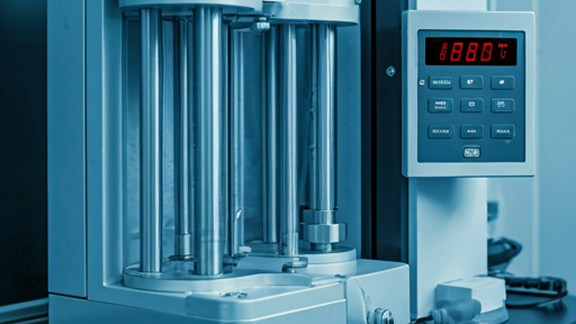
Our needle-free technology eliminates the mechanical limitations of traditional electrospinning, enabling industrial-scale production without compromising microscopic precision.
INDUSTRIAL APPLICATIONS
Scalable solutions for high-compliance manufacturing sectors.

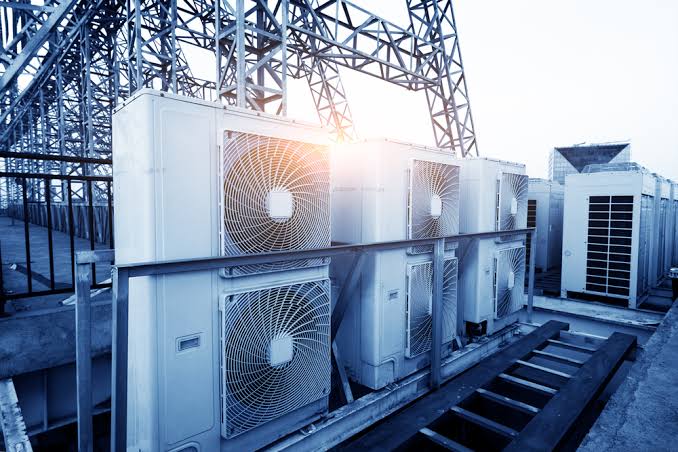
HVAC Systems
Achieving MERV 15-16 ratings with the pressure drop of standard MERV 8 filters.

Personal Protection
N95 performance with significant breathability improvements for professional use.

Transportation
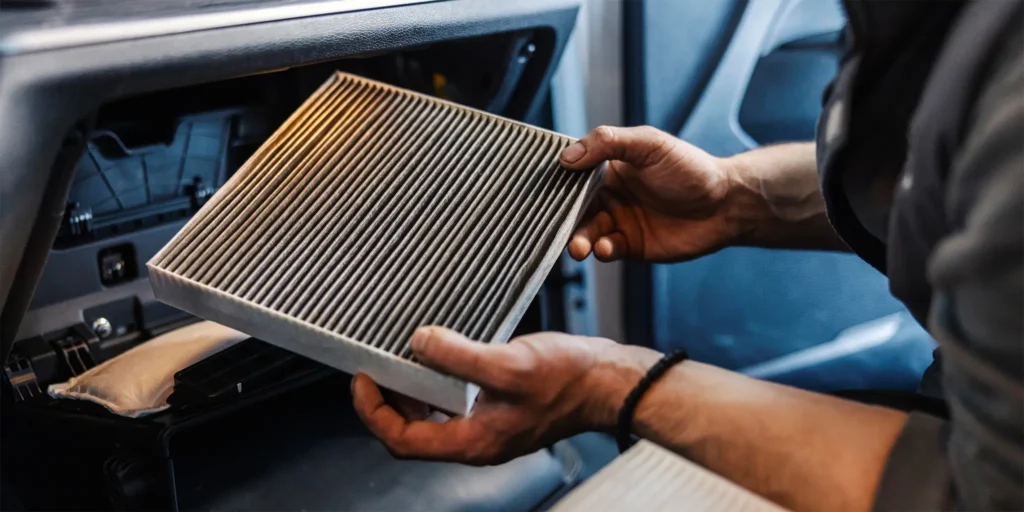
Cabin air VOC reduction and particulate capture for automotive and aerospace.

Medical & Cleanrooms
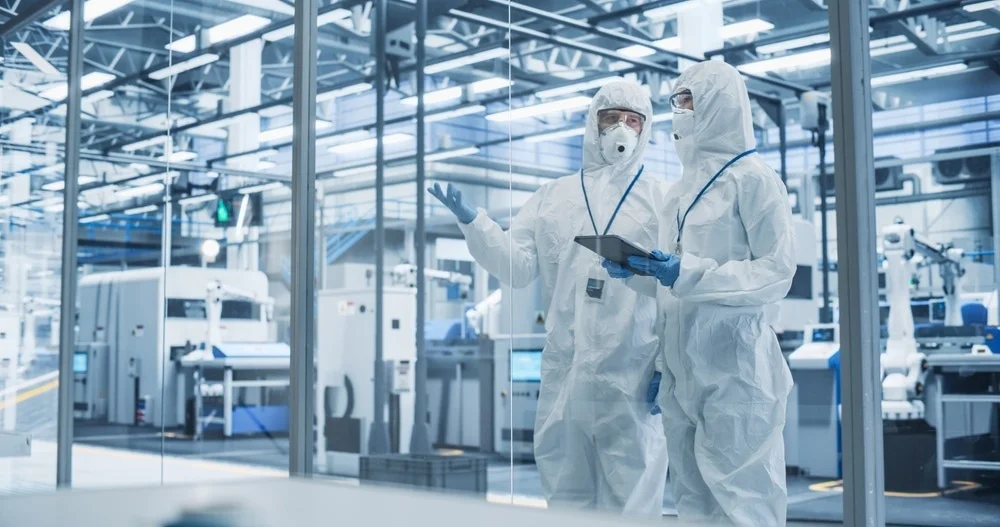
HEPA/ULPA grade performance for sterile environments and clinical architecture.

Industrial Filtration
Heavy-duty dust collection with extended filter life and reduced energy costs.
Value Chain Integration
Supply Chain Value Proposition
Our technology seamlessly integrates into the existing air filtration value chain, delivering clear financial and performance incentives for every stakeholder.
Next-Level Manufacturers
Plug-and-Play Roll Goods
Apply our ultra-thin nanofiber layer onto your existing nonwoven substrates (PET, PP, fiberglass) without changing your pleating or assembly machinery.
Premium Differentiation
Upgrade standard MERV-rated filters to HEPA or ULPA grade with a fraction of the material thickness.
Lower Compliance & Regulatory Risks
Eliminate silver handling and nano-leaching concerns in consumer or medical-grade products.
Next-Level Manufacturers
Substantial Energy Savings
Lower air resistance means HVAC fans and air purifiers consume significantly less electricity to move the same volume of air.
Reduced Total Cost of Ownership
Longer filter life means fewer replacements, lower maintenance labor costs, and reduced waste disposal.
Uncompromised Indoor Air Quality
Continuous protection against PM2.5, airborne pathogens, and toxic VOC gases simultaneously.
Application Matrix & Dual-Perspective Superiority
Commercial & Residential HVAC Systems
Next-Level Manufacturer Perspective:
Traditional HVAC filters require thick glass-fiber or bulky synthetic matrices to achieve high MERV ratings, making them heavy and restrictive. Our ultra-thin nanofiber coating allows manufacturers to produce low-profile, high-efficiency (MERV 14-16+) filters that fit into standard 1-inch or 2-inch frames, capturing a lucrative market share in building retrofits where space is constrained.
End-User Perspective:
Property managers and homeowners experience a dramatic drop in energy bills due to the reduced static pressure on the HVAC fan motor. Filters do not need to be changed as frequently, and the silver-free antimicrobial protection ensures the HVAC system does not become a breeding ground for mold and odors during humid seasons.
High-Performance Portable
Air Purifiers & Cabin Filtration
Next-Level Manufacturer Perspective:
To capture VOCs and viruses, traditional air purifiers require a multi-stage combination of HEPA filters, heavy activated carbon pellets, and UV lights. This increases unit size, weight, and bill-of-materials (BOM) costs. By using our multi-functional nanofiber layer (HEPA + Catalyst + Antimicrobial all-in-one), manufacturers can design sleek, compact, and lightweight air purifiers or automotive cabin filters with simplified internal architectures.
End-User Perspective:
Consumers enjoy whisper-quiet operation because the purifier’s fan can run at lower, quieter speeds while maintaining high Clean Air Delivery Rates (CADR). They also save money by purchasing a single multi-functional replacement filter instead of separate particulate, carbon, and UV lamp modules.
Industrial Cleanrooms & Semiconductor Manufacturing (HEPA/ULPA)
Next-Level Manufacturer Perspective:
Traditional cleanroom filters rely on fragile borosilicate fiberglass. These filters are highly prone to pinhole leaks during pleating, off-gas volatile compounds themselves, and require immense structural support. Our needle-free nanofibers offer exceptional tensile strength and flexibility, completely eliminating pleating defects and guaranteeing zero chemical off-gassing for ultra-clean semiconductor processing environments.
End-User Perspective:
Advanced manufacturing facilities reduce the risk of catastrophic yield loss caused by filter structural failures or micro-tears. The high filtration-to-resistance ratio translates to megawatt-level power savings across massive cleanroom ceiling grids running 24/7.
Operational Value
& End-User Impact
30%
99.9%
Enhanced protection in schools and medical facilities.
Max
Pure
2X
Collaborate With Us
We are currently expanding our global footprint and seeking strategic B2B manufacturing partners, material licensees, and visionary investors to accelerate the deployment of this disruptive technology. Contact our material engineering team today to request roll samples, technical data sheets, or a pilot production consultation.